10 April 2018
It's about time

Not a minute later, messages started appearing on the screens in the train, explaining that there was a delay due to "operational reasons". Simultaneously, the conductor came on the tannoy to explain that our arrival would be delayed by a few minutes since a preceding train was still blocking the track at Zurich Airport.
By that time, a lot of huffing and puffing had already ensued with the bleary-eyed commuters around me, with one lady calling someone to explain that she'd miss her connecting bus because that there were "delays again", and that she'd now have to wait another 30min for the next bus.
As she hung up, our train set into motion again. In the end, we arrived at the airport a full five minutes late. I easily made my flight, from which I am writing this now. But to my compatriots, the event surely confirmed their impression of degrading service reliability, and ruined their day early.
Taking the train has been a recurring feature of my most recent trip. Yesterday, I was travelling from Frankfurt to Zurich, using a deeply discounted Sparpreis ticket that restricts users to specific trains - at least in theory. In practice, my first ICE was running over ten minutes late, and when we got to my planned connecting station, I learned that the other train was over 45 minutes behind schedule. The German conductor shrugged and suggested I continue riding the first train all the way to its terminus in the border city of Basel and figure out a way to Zurich from there. By the time we reached Switzerland, station announcements proclaimed that the connecting train had now been cancelled completely. Gone, disappeared, presumably vanished along the tracks with all hands aboard. Die Bahn kommt not, and it didn't much care, either.
The Swiss Railways, on the other hand, immediately mobilized a replacement train from its stand-by reserve in Basel, in order to keep its famed Taktfahrplan intact. This was taken for granted by my connecting countrymen, and we reached Zurich with a delay of a full three minutes. The Germans, including the ICE train staff, were baffled.
Punctuality, then, is as much a cultural as a chronological concept. That in nine years in Canada I have never taken Via Rail already says a lot. But every time I walk across the lobby of Montréal's Gare Centrale on my way to grab lunch, I glance at the big arrivals and departures board hanging from the ceiling. Not only does it show but a handful of trains running all day, inevitably at least half of them also post a delay. And we're not talking five minutes here: Half an hour or more are the norm, with revised arrival times indicated as "estimates". No one seems to mind. "That's just how it is" my colleagues would say. It probably helps that Via Rail's main competitor is an airline that finished dead last in North American punctuality statistics.
The Swiss, then, are both fussy and spoilt with their trains. Yet there is one country that puts Switzerland to shame with its rail performance. That country, to which I had bought a rail pass for this vacation, is of course Japan. In the land of the rising sun, delayed trains would be considered rude and shameful. And therefore, they simply don't seem to exist.
On my entire trip, not one of the many trains departed even a minute late. Whether it was one of the fabled Shinkansen super expresses, or a simple suburban train, they all left smack on time. The entire system is perfectly calibrated for maximum efficiency and reliability, and the Japanese are masters at lining up in the right spots, letting people off first, getting on quickly, and whoosh... we're off.
The latest statistics I found indicate that the average delay for a Shinkansen train was 52 seconds, down from a record 17 seconds in 2007. This is in an island nation with anything from typhoons to blizzards happening, with the occasional earthquake thrown in for good measure. It's mind boggling. Throughout my trip, I saw precisely one sign indicating a delay, prompting instant jokes about that train driver committing seppuku at the end of his shift. Speaking of suicide, urban legend has it that it is dishonorable for Japanese to throw themselves in front of a train during rush hour, since the ensuing delay would inconvenience too many others...
Reflecting on the different perceptions of punctuality will hopefully help me putting things into perspective the next time I find myself on a delayed train. And until then, it will give me new found appreciation for doing things just in time. Or, as they say when the Montréal metro is stuck: D'autres messages suiveront.
Labels: Asia, Canada, culture, Switzerland, travel
# posted by Oli : 12:23

27 February 2018
East goes South

While not much has changed for me - a few good books and a deck chair keep me merry for a few days, then I get bored - the tourism market around me certainly isn't the same anymore.
In 2003, I found myself in a four star resort in Thailand, run my Caucasians for an entirely western clientele. We fit right in with the German families, Scandinavian sunseekers, British lobsters and French hippies on their way to the full moon parties. Courtesy of cheap long-haul flights, Asia was no longer an unaffordable, exotic dream destination, but the four season-proof alternative to old European beach playgrounds in Ibiza, Cyprus and the Adriatic Sea.
In 2018, popping my head up in a Malaysian swimming pool and looking at the loungers around it, I stared into mainly Asian faces. The Chinese had arrived in force, edging out the quieter Korean contingent. The Lebanese were easily identified as the ones calling the pool boys habibi, and the Saudis as the guys in shorts and flip-flops holing hands with the gals under a Niqaab. The many local Malay guests directed torrents of instructions in Bahasa Malysia at waiters and probably got far spicier curries than everybody else in return. The Singaporeans sing-sung their English (la!) in designer swimwear. Europeans were few and far in between, and nary an Ozzie or a Yank was to be found.
Clearly, Asia has arrived at its beaches. And while my favorite newspaper has written about the emerging Asian middle class for years now, this was for me the most tangible manifestation to date of that economic shift.
Far from complaining, I noted the change in guest mix with content. Not only does it represent a happy turn in the fortunes of the newly affluent, it also makes this pale-skinned guest feel less like a member of a colonial occupation force. On a more practical level, more Asians translated into better and more varied food offerings at the resort, while fewer Germans meant I didn't have to go reserve a beach chair at the crack of dawn. Speaking of which, the shade-seeking Asians seemed more concerned about their parasols than the sun anyways. And instead of tacky Europop and teutonic oompah-oompah, they listened to K-Pop, where the lyrics blissfully pass me by.
Resort management, also in local hands these days, does a good job at catering to the needs of their new clientele. There were many special deals, decorations and even little red packets given out for Chinese New Year. Wifi coverage was fast, free, unlimited and extended to the farthest reaches of the property. The resort map even suggested the ideal spots for Instagram-worthy selfies. And they were used extensively.
I looked on bemused, and perhaps a bit sad, as old and young guests alike missed out on the gorgeous sunset while they stared at their screens and video-chatted with the folks back in Tianjin and Wuhan (no time difference to deal with!). But I was glad that they were there, for they made this Malaysian resort live up to the slogan the country's tourism board has coined years ago :Truly Asia.
# posted by Oli : 22:28
10 September 2017
Nanny state

Inevitably, the opposition of the day decries such advertising as a colossal waste of public funds for partisan means - until it is their turn to govern, at which moment they do exactly the same. When the Liberals replaced the Tories, the focus of the messages changed radically, but their frequency did not.
Coming from Switzerland, where the tax-funded take-over of the airwaves is both much less prevalent and typically much more technocratic (the health ministry promoting safer sex, the firefighters informing about the proper use of candles on Christmas trees), Canada's government propaganda has always seemed a bit unseemely for a democracy.
But it wasn't until my recent visit to Singapore that I realized just how overbearing even a non-totalitarian government can be. It is an open secret that the political competition in the flourishing city state is, ahem, somewhat limited, and consequently the governing party may feel less of an urge to promote blatantly partisan causes. That doesn't mean the state stays out of your face, though.
Much more so than on any previous visit, I realized how ubiquitous public admonishments were. The buses I rode had no commercial advertising at all, but were plastered with signs telling riders where to sit, how to stand, where not to put their belongings, how to properly pay their fare and so on.
In parks, people were exhorted to pick up and recycle their garbage, not to waste water from the fountains, not to run and play outside of playgrounds, and to limit their use of pick-nick tables on busy days.
And at the signature hawker centers, into which Singapore has organized its street food vendors, nagging public hygene and behavior rules (always wash your hands! return and separate your waste!) left a bit of a sour taste, no matter the sweet cartoon characters used. The few days in this nanny state started to get to me.
Clearly, the tremendous success of the tiny, multicultural, clean and perfectly efficient country speaks to the effects of such campaigns, and its citizens must have internalized all the rules of proper behavior. So much so that when I swam at the public pool, where a broad section was reserved for lap swimming but I was its sole user, the pool attendant stopped me and pointed to a big sign: It explained how to properly swim up on one and down on the other side of the section. My objection of being the only swimmer present was dismissed with a bewildered look: "But these are the rules."
Well then. I for one am glad to be back on my way to Canada, where at least half of the political spectrum seems to mind government publicity at any one time. And the public reacts to it the same way as to any other advertisement: By tuning out.
Labels: Asia, Canada, politics
# posted by Oli : 12:34
13 April 2016
Think different

It wasn't because of the 8 meters of average annual snowfall (although that sounded good), nor because of the depreciated yen (although that helped), nor even for earning more frequent flyer miles (I redeemed some).
It was to expercience skiing that is different. On previous visits to the land of the rising sun, I was intrigued and amused by the unique ways in which the Japanese do things. Often processes, habits or devices would look completely bewildering at first, only to make perfect sense once you'd understood how they worked. Undisturbed by western standards, Japan has developed its own modus operandi, frequently with amazingly good results.
During my stay at a mid-sized mountain resort, where I was one of but a handful of caucasian visitors, I found many examples of an unconventional approach. From the smart management of equipment rental (punch your particulars and skills into a terminal, store it on your ski pass, then go to a counter where everything you need is waiting for you in your size) to the efficient lunch order process (review available options on big boards outside the restaurant, pick a card with the number of your choice, give the card to the chef, pay for your meal while he prepares your dish, leave), countless interactions were designed in unexpected, clever ways.
Smart design extended to physical infrastructure as well: Chairlifts all came with safety restraints and snow protection hoods that opened and closed automatically. Tiny lockers featured illustrations on how to stow multiple ski and snowboard sets in them. Next to them, air compressors were available to blow-dry wet skis prior to putting them away.
To rehydrate after a day out on the slopes, the ubiquitous Japanese vending machines offer refreshments. The more money you put in, the more lights go on, highlighting which products can be bought with the inserted credit. Should you thirst for harder stuff, fully automated beer pouring machines will tilt your glass at the right angle to ensure a good fill, then stand them upright for a final dash creating a nice foam head.
These quirks provided the entertaining and inspiring backdrop to what was a very enjoyable ski break. The quintessential Japanese friendliness and stellar customer service mentality saw me perfectly taken care of: A lack of English skills did not stop staff from greeting and thanking me everywhere, all the time. And I certainly can't imagine the grumpy attendants manning Swiss chair lifts bowing to me every time I get on or off.
With Hokkaido being famous for the freshness of its seafood, the culinary offerings in the resort did not disappoint. The sea was visible on the horizon from the mountain's summit, and over the duration of my stay I must have eaten most of its inhabitants. To digest, few things can beat a steaming hot thermal bath with a view of the calm winter wonderland outside. No Vodka Red Bull-infused après-ski brouhaha here - just perfectly zen relaxation.
Until you notice the gaudy Hello Kitty and Pokémon stores around the corner. Nippon ni yokoso!
# posted by Oli : 19:28
31 January 2016
Knights Templar

For one thing, the buildings in question were not associated with the global organization headquartered in Rome. Also, they are located in a far-away land that I had long been meaning to visit. They are significant and beautiful enough to be featured on the UNESCO world heritage list. And instead of haggard bodies hanging from crosses, they are populated with smiling gods and topless celestial dancers. Clearly, a pilgrimage was overdue.
Upon arrival in Cambodia, it quickly became clear that others had heeded the call, too. For better or worse, the town of Siem Reap is on track to host over 5 million tourists this year, with large Chinese and Korean tour groups surpassing western shoe-string backpackers and French colonial nostalgists.
This mass influx inevitably brings with it a degree of tackiness, as evidenced by a few sleazy pubs and massage parlors in downtown Siem Reap, and a clutch of hawkers outside the main attractions. But it remains less pushy and garish an environment than the nether parts of Thailand, not to mention the gift shops in the cathedrals of Europe. We were offered neither a splinter of a dead saint's bones nor a live teen girl.
Nudity remained strictly confined to the apsaras, the bare-breasted nymphs carved into the sandstone walls of Angkor's temples. Despite having had to withstand the tropical elements for a thousand years, many of the intricate details and spectacular architectural features remain visible. Bas-reliefs tell the stories of victorious battles and everyday life of the ancient Khmer, while the grandeur of the structures speaks to the power and progressiveness of their builders. Over the centuries, some temples even switched back and forth between Hinduism and Buddhism, or served both concurrently. That, too, seems enlightened.
The 20th century saw ample archaeological and restoration work, notwithstanding the very troubling track record of the most recent, Pot-headed Khmer Empire. Its demise ushered in the time of mass tourism. But there remain chances to get away from it all: Seeking solitude, we coaxed our guide and tuk-tuk driver into taking us to a more remote, unspoilt and half overgrown temple, which we had all to ourselves. It was there, scrambling over fallen stone slabs, peering into ancient relief galleries and admiring massive banyan trees growing through crumbling temple walls, that the explorer's epiphany set in.
This was a truly magical place - in an Indiana Jones kind of way. Or, rather more appropriate given the busty apsaras, in Tomb Raider fashion. Watch, don't touch the signs in churches used to say. Even I can believe in that: I'm getting the DVD now.
# posted by Oli : 17:41
23 November 2014
Break fast

When I first travelled to Singapore some 12 years ago, fortunate circumstances placed me at one of the major hotels in town. The trip marked my first exposure to the fabulous cosmopolitan breakfast buffet.
Not that I am much of a morning guy. Normally, a bowl of cereal or a cup of yogurt will do in the short time between the alarm clock and leaving the house. However, on a normal day I also have to prepare my first meal myself, and am pressed for time.
Breakfast buffets are different. While in North America, they tend to be rather sad affairs of toast, runny scrambled eggs and stale pastries (as I had to find out first hand only a week later), they are sumptuous and varied in Asia, catering to local palates as well as those of travellers from other parts of the vast continent, and the entire world beyond.
Doing as I was told, I traded the lounge for the restaurant and immediately found myself sauntering past an open-kitchen bistro, where keen chefs at various stations hawked their offerings. I started my meal with a platter of European cheeses, smoked salmon and Nordic whole-grain bread. Properly grounded, I then ventured to the steamed dumplings, spicy noodles and fried fish bits that form part of the local cuisine - skipping the congee as much as I would oatmeal or porridge. Of course, I could not end my meal without a sweet note, delivered in the form of some Waffles with maple syrup and a fried sesame ball filled with bean paste.
I chewed not just on my buffet picks, but also on how status of the day's first meal varies between one region and the next. It can be a social occasion, a nutritional foundation for what is to come, or a bothersome nuisance that needs to be taken care on the go with no matter what (I am looking at you, Tim!). A good buffet caters to all these styles.
Personally, I enjoy oscillating between them just like I do going back and forth between the food stations, having converted from my childhood aversion to early morning eating. These days, I am a keen believer in morning indulgence.
But one does not need to be faithful to any of today's nutrition dogmas to sit down at the buffet, order tea and rejoice at the notion that the time has come to break fast.
Labels: Asia, culture, food, travel
# posted by Oli : 21:11
05 November 2014
Happy Place

Not just on vacation. Not just half way around the globe. But here, in this particular spot. In this particular way. I have just flown the world's best airline, in their best cabin, on their longest route, to their home airport. For 16 hours, I was pampered by a crew that went above and beyond. It's the pinnacle of commercial aviation.
After landing, a private cabana with a soaking tub and a rainfall shower awaited. And now, properly refreshed, I am at The Wing, the airline's bright and airy signature lounge, on a cozy balcony overlooking the hustle and bustle in the concourse below and the planes taking off outside. Soothing piano tunes are in the air, waiters keep my Cathay Delight topped up, and I video-chatted with her on the other side of the Earth - real time and for free. How could things be any better?
Many people like travelling, but for me the love is not just for going places, but at least as much for how to get there. I'll go to some lenghts to make sure that it is via my Happy Place. It's a taste I have acquired, and gotten addicted to, at an age where others may take an outsized interest in cars, or fashion, or sports. Come to think of it, it is now 10 years ago that I have first indulged this passion. Since then, I have been fortunate enough to try out a good number of other fine ways to travel, but nothing quite compares. It was love at first sight, and it still holds.
The marketing insider in me chides the emotional geek, who so easily falls for a brand - but the geek will tell the marketer that this brand has delivered without fail, and against implausibly high expectations. Beyond the rational commodity of air transport, there is clearly an emotional relationship here.
I don't mind the long layover. I will order some freshly steamed dim sum, a pot of fragrant jasmine tea, and the local paper. In this place, I will be happy.
# posted by Oli : 19:58
19 October 2013
Postcard

Postcards, it would seem, have gone out of fashion. In the recent past, I would delightfully bargain my way across Asia, leveraging fierce competition and the sudden demand for bulk discounts ("oh Sir you have many friends!") to secure the best price for the little snail mail greetings. But today, people seem to prefer sending a little text message or adding a post on Facebook to get their friends jealous. I am one of the few nostalgics holding out with physical mail, which so nicely conveys that sense of distance and foreignness.
In the end, a roadside vendor released me, and the bargaining was easy, thanks to the distressed inventory he was selling - I only paid a couple of grand (yes, that's Vietnamese Dong) and now my dispatches from Saigon are on their way to the West.
They report on a city steeped in recent history, filled with suicidal but suprisingly fluid traffic, populated by an upbeat and striving people and abuzz with entrepreneurial activity I did not expect. From the westernized Starbucks clones, which have pushed past Nescafé and are holding out against the Seattle supremo, to the old-fashioned street food vendors carrying their wares in wicker baskets dangling from a pole across their shoulders, everybody seems to be up to something.
Stark, then, is the contrast with the omnipresent communist propaganda posters. With their distinctive style, hammer and sickle and all, they are a dying art form, just like the postcard. One hip gallery sold them as desktop calendars.
Almost as much out of place, and yet as prevalent, are memories of the war. Or, as our guide told us on a tour of the Cu Chi underground tunnel network used by the Viet Cong, of the wars, for Vietnam has known many in its turbulent history. Today, tourist attractions such as the former Independence Palace, residence of the president of South Vietnam, offer a bizzare blast from the past with their brutalist-modern sixties architecture, which seems to come right out of a James Bond movie. They bring up painful - and embarassing - memories of a time when dispatches from Indochina did not typically include picture postcards. And they make it obvious, nostalgia or not, that Vietnam's progress into the 21st century is a good thing.
# posted by Oli : 06:08
03 May 2011
Cathedral
 There is no doubt: Architecture is a form of communication. The way a building is designed speaks of its purpose, importance, and quality. It is a token for the power, ambition and not least the imiagination of the people behind it. Since time immemoral, mankind has sought to express itself via the structures it builds. Religious edifices, from ancient Egypt's pyramids to Cambodia's temples and Renaissance Italy's impressive cathedrals, are particularly stunning examples of mankind's determination and efforts.
Today, the grandest designs are arguably no longer reserved for deities. Instead, the 21st century's firm belief in progress and technology is celebrated in magnificient cathedrals of transportation - modern "greenfield" airports. Unlike the overcrowded nations of Europe and tax-deprived governments of North America, the booming economies of Asia have built a good number of these new and megalomaniac air travel hubs over the last two decades. As it happens, my recent junket around the world included a good number of them.
From Renzo Piano's pale-rose and pastel Osaka Kansai, via Sir Norman Foster's dome-roofed Hong Kong Chep Lap Kok and Beijing Terminal 3, to the retro-space-station looks of Bangkok's Suvarnabhumi airport, these gigantic, glass-and-steel, light-swept terminals are a testament to the aspirations of their host cities, and mankind's unwavering faith in air transport as an engine for human progress. Built on artificial islands, and drawing heavily on the elate-and-awe effects of wide horizons, large window fronts and sweeping views of the magical flying machines out on the apron, they instill excitement and anticipation in their visitors. Even if you're not as fond of "airworld" as I am, you will be put into travelling mood by these temples of transport.
Every time I step into an airport, that magical aura of airline logos, exotic destinations on the departure board and an international crowd zipping about instantly enchant me - rarely more so than under the roof of Hong Kong's magnificient hub, which has been the pivot of many a memorable trip. So imagine my surprise, and satisfaction, when I discovered that Beijing's Terminal 3, also by Norman Foster, follows the same design lines, except for a color palette changed to hues of red, in a nod to Chinese preferences and the terminal's design theme of "dragon spine". As it emerges from the city's perennial
In doing so, it successfully treads the thin line between adhering to international standards of design and terminology, and providing passing travellers with a local flavor. In the same vein, Bangkok's Suvarnabhumi charms with beautifully landscaped (albeit seemingly inaccessible) tropical gardens, while little flower pots labled "welcome to KIX", tended by local school kids, attest to the diligence and sense of purpose of the Japanese. Add to this the quintessential Asian efficiency and courtesy (white-gloved security inspectors, anyone?), and passing through these airports becomes an experience as elating and uplifting as a visit to a baroque cathedral may have been centuries ago. Who could doubt the positive effects of globalization and connectivity in such a setting?
Although the midfield terminal at my last stop, the intimately familiar Zurich airport, is by no means dated, it seemed quaint and puny compared to the Asian mega-ports I had just called at. And yet, travelling through ZRH will always remain a unique experience to me: Not just for the fact that friends and family will be waiting beyond the sliding doors, but precisely for the cozy hominess the place exudes. After all, Zurich is the only airport where cowbells and yodeling welcome you on the inter-terminal shuttle, while a blonde Heidi blows you a kiss through the train's window. And so, much like a devout catholic may enjoy the odd visit to St. Peter's before returning to his local chapel, I am touched by the Asian cathedrals of travel. But it is that airfield in Kloten that I will always return to.
Labels: Asia, culture, Switzerland, travel
# posted by Oli : 16:21
22 April 2011
RTW
 In Jules Verne's classic story, it took Phileas Fogg 80 days to travel around the world. While that may have been a mad dash in the 1870ies, it would be an eternity today. And it would, sadly, amount to over five times my annual vacation allotment. So no matter how much I'd like to tread in the literary hero's footsteps (not to mention having a lackey named Passepartout), my choice was between short trip and no trip.
So here I am, at New York's JFK airport, one of the 21st century's crossroads of the world and a fitting place to start my quick tour du monde. On the tarmac outside, tailfins from all continents taxi by, while in the terminal travellers from just as many places hurry past, guided as if by magic to intercept their matching aircraft. My vantage point is the familiar Swiss Air Lines lounge, and indeed I am headed to Switzerland.
But, much like Mr. Fogg, I will go the round-about way. Which is why, instead of taking an 8 hour flight due east, I'll soon board a 14 hour one in the opposite direction, dropping me on a politically divided peninsula half-way around the globe. I then plan to chase cherry blossoms in a land of trembling grounds and melting reactors, before visiting a harmonious society in their capital. I'll meet my trusted travel buddy for a great leap forward on an equally great wall, thus strenuously earning some comfort time in the fascinating and familiar surroundings of a fragrant harbor. Yet another globetrotter will meet us there, and onwards our journey will go to the city of Angels. It is their soothing and relaxing touch which will invite me, at long last, to join their flight to that small alpine country in whose New York outpost I currently sit.
Yes, I'll definitely take the long way home. In fact, the final bit back to Canada will seem like a walk in the park. But as any good world traveller would agree, it's all about the journey. And while the globe may only turn a few times while I am gone, you can bet that I'll add one more spin myself. It's a childhood dream come true - I'm getting on the merry-go-round!
# posted by Oli : 11:28
28 February 2010
Skyline
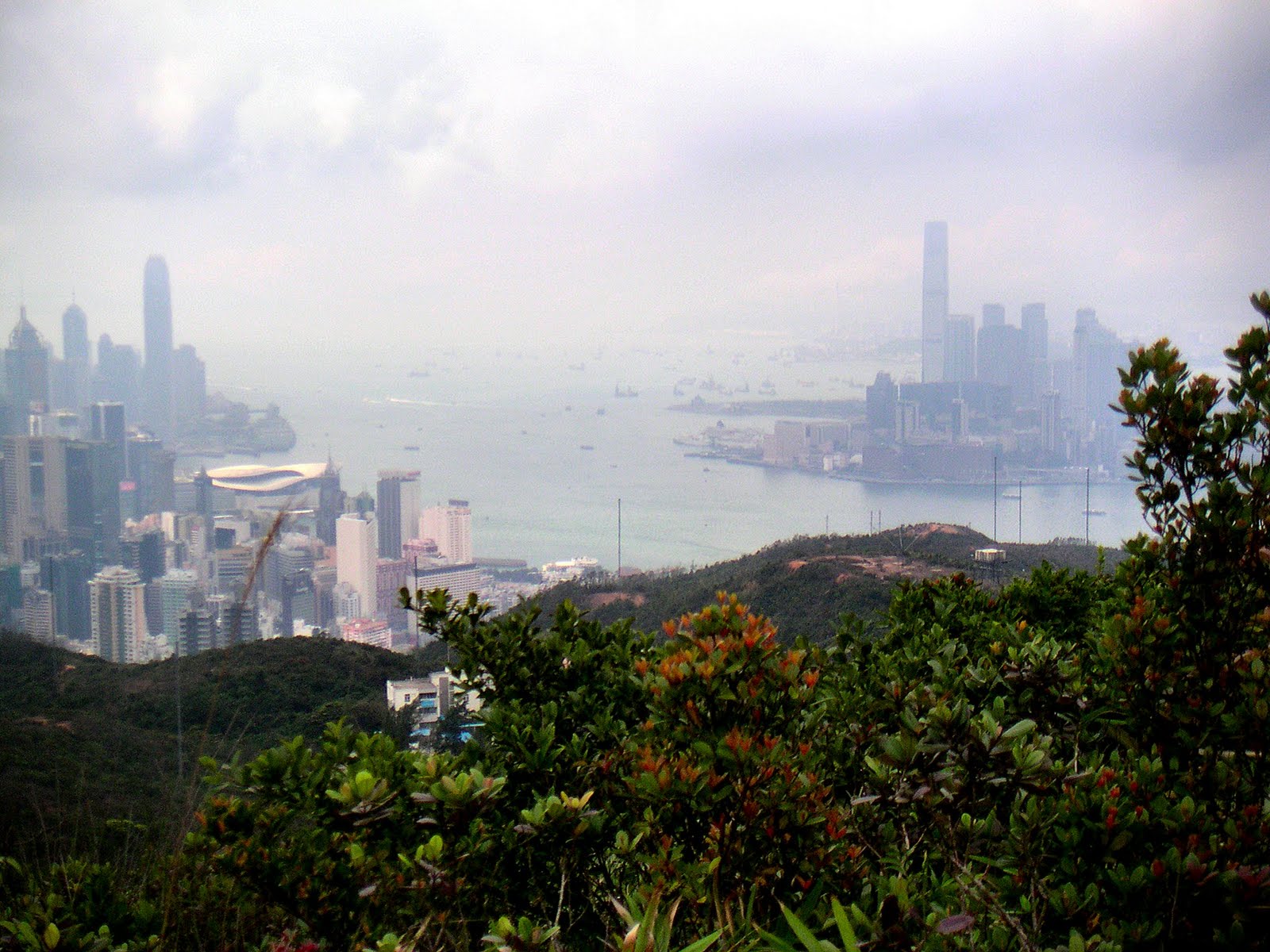 It has got to be one of the most beautiful urban vistas in the world. Ever since I first visited Hong Kong, I am captivated by the vistas of Victoria Harbour, between Hong Kong Island and the tip of the Kowloon peninsula. The contrast is between the man-made architectural wonders, one skyscaper more extravagant than the other, and nature's stunning setting of lush green hills and a sliver of South China sea. Add to this the frequently changing weather, from clear blue to low-passing clouds or sudden downpours, and you have a very versatile combination.
This weekend, which I passed yet again in the former British colony, saw me admire this skyline from multiple angles. For my first night, I redeemed a free night award at the Grand Hyatt, attached to the HK Convention & Exhibition Centre, and was offered a room with a harbor view over to the Kowloon side. The next morning, I relocated to familiar Starwood ground in form of the Sheraton, directly opposite the Hyatt in Tsim Sha Tsui. I would be hard pressed to say which view I liked better, but I don't think I will ever tire of gazing at the nighttime lightshow before going to bed, and opening the curtains in the morning to see the Star Ferry go by.
Probably the most unusual, and definitely the most breathtaking view of the harbor presented itself on Saturday, as I climbed the last steps of the Wilson Trail's second stage, arriving on a summit high above Quarry Bay. Ever since a Swiss friend introduced me to the idea, I have started taking hikes in Hong Kong's hinterland on every visit. Unbeknownst to most tourists, a wide network of hiking trails criss-crosses the hilly countryside of the city-state, offering a surprising and all together different perspective on the destination. Having previously hiked on Lamma and Lantau islands, as well as in the New Territories, it was definitely the turn of the pièce de résistance, Hong Kong island itself. I set out on the south side near Stanley, and made my way steep uphill in the humid but foggy air, across multiple hills and past shrines, old British bunkers and grim-looking joggers. Four hours and 2.9 liters of drinking water later, I reached the panoramic viewpoint during a moment of almost clear vision. Solemn, serene and imposing, it was well worth all the effort, and gave me the excuse I needed to tuck into afternoon tea at another posh hotel in the late afternoon.
Writing these lines moments before boarding my flight back to Canada, I am happy to say that hiking in Hong Kong provides lasting memories. For me, they are not just in the form of pictures, but also in sore legs and blisters...
# posted by Oli : 03:16
20 February 2010
Wanderlust
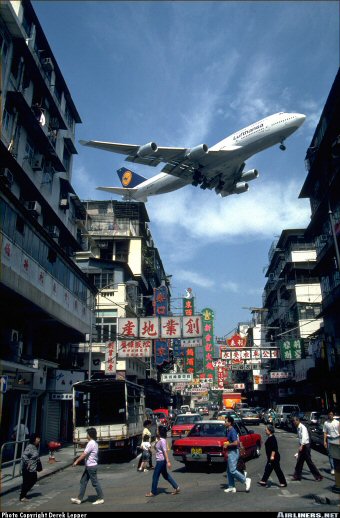 Every now and then, a hearty dose of continent hopping works wonders to cure the itch for travel, appropriately called Reisefieber in German. Barely having returned from my little European jaunt, I have already left home yet again, this time heading straight north... and then down again on the other side of the North Pole. And before I knew it, I found myself in the lobby of a wonderful, welcoming and well-located hotel, taking a plunge in the whirlpool overlooking Wic.. ah, no, Victoria Harbour. My wanderlust will see me travel on tomorrow, but I'll return to Hong Kong, one of my favorite cities the world over, next weekend. At which point I then intend to take the "wanderlust" rather more literally.
With so much travel in such a short time, things can eventually fade into one big fuzzy memory, given the general state of transition and jetlag. That would be a shame though, for I still value and cherish every single trip I get to take. Therefore, both to help my own failing memory and potentially for your reading pleasure, I have complied a few trip notes specifc to last week's Lufthansa flights. They are a far cry from the elaborate and illustrated trip reports that set the standards on Flyertalk.com, but it was the best I could do for now. You see, my time here is precious, and the shopping list at some of my favorite fashion retailers is long. And that's before we start talking about the food... Waiter!
# posted by Oli : 04:44


Subscribe to Posts [Atom]


